
Most drivers pull into a parking lot, come back to find a dent, and assume there’s one way to fix it: take it to a shop and get it repaired. What they don’t always know is that there are two very different methods for repairing a dent, and choosing the right one can affect your cost, your timeline, and the long-term value of your vehicle.
Understanding paintless dent repair vs traditional repair before you walk into a shop means you can ask the right questions, set realistic expectations, and avoid paying for more than your car actually needs.
Here’s what you’ll learn in this post:
- How paintless dent repair and traditional dent repair each work
- What drives the cost difference between the two methods
- How long each repair typically takes
- Which option fits your situation and why it matters for resale value
What Is Paintless Dent Repair?

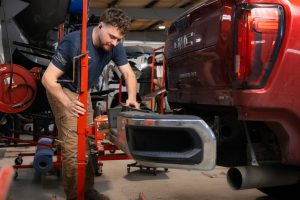
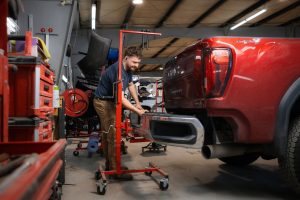
Paintless dent repair, or PDR, is exactly what it sounds like. A technician accesses the damaged panel from behind and uses precision tools to carefully massage the metal back to its original shape. No filler. No sanding. No repainting.
Because the process doesn’t touch the surface of the paint, your factory finish stays completely intact. That matters more than most people realize. When a dent qualifies for PDR and the repair is done correctly, the panel can be restored so the damage is difficult or impossible to notice, all without a single drop of paint.
PDR works best when the dent is shallow, the original paint is still intact, and the panel hasn’t been stretched too far. Door dings, hail damage, minor creases, and shallow dents from low-impact fender benders are all strong candidates. If the paint is cracked, chipped, or missing, or if the metal is sharply creased, PDR isn’t the right tool for the job.
What Is Traditional Dent Repair?
When a dent is too severe for PDR, or when the paint is already compromised, traditional dent repair is the path forward. This process involves filling and smoothing the damaged area, sanding the panel, then repainting and blending to match the surrounding finish.
It takes more time and more materials, but it’s the right answer when the damage calls for it. Deep dents, sharp creases, panels with cracked or missing paint, and damage near edges or body lines often require this level of work to restore the vehicle’s appearance properly.
Traditional repair done well can bring a panel back to factory appearance even after significant damage. The goal is the same as PDR: a car that looks like the dent never happened.
Paintless Dent Repair vs Traditional: What Drives the Cost?

Dent repair cost isn’t one-size-fits-all, and the method used is only one piece of the picture. Here’s what actually moves the number.
Dent size and depth. A quarter-sized ding takes far less time than a dent spanning a large section of a door panel. Larger, deeper dents require more technique and more labor regardless of which method is used.
Dent location. A dent in the middle of a flat door panel is relatively straightforward to access. A dent near a wheel well, bumper edge, or body line is a different story. Tight corners and edges limit tool access and demand more precision, which means more time.
What’s behind the panel. Two dents that look identical from the outside can carry very different price tags. Internal bracing and panel obstacles can restrict access from behind, making what looks like a simple repair significantly more involved.
Paint condition. Intact paint opens the door to PDR. Cracked, chipped, or missing paint means the job expands into surface prep, color matching, repainting, blending, and clear coating. That’s more materials and more labor.
Vehicle make, model, and panel material. Aluminum panels are lighter but harder to work with than steel. Luxury finishes and multi-stage coatings require more time to match accurately. The vehicle itself plays a real role in what a repair costs.
Repair method required. PDR is generally more affordable because it skips the paint materials and reduces labor time. Traditional repair involves more steps, more products, and more hours, which is reflected in the estimate.
Timeline: How Long Does Each Repair Take?
PDR is fast. Because there’s no paint to apply, no primer to cure, and no blending to wait on, many PDR jobs are completed same day or the next day. It’s one of the reasons drivers with hail damage or a fresh door ding often prefer it when the dent qualifies.
Traditional repair takes longer. Moderate dents typically take one to three days. Larger repairs that involve paint work usually run several days up to a week. If multiple panels are involved, or if hail damage has affected a significant portion of the vehicle, the timeline can extend further.
Parts availability and insurance approval can also affect turnaround, particularly for repairs that involve panel replacement or supplemental damage discovered during the process.
Why Your Original Paint Matters

Factory paint isn’t just cosmetic. It’s a layer of protection that took years of engineering to get right, and it’s something future buyers and dealers notice. When you trade in or sell a vehicle, a clean paint history is a real asset.
PDR preserves that original finish completely when the dent qualifies. Even a high-quality repaint, done by skilled technicians with precise color matching, is still a repaint. It shows up in a close inspection, and it can affect resale value in ways that a PDR repair simply doesn’t.
That’s not a knock on traditional repair. When the paint is already damaged, repainting is the right call. But when PDR is an option, keeping the factory finish untouched is worth considering.
Questions to Ask Before You Commit
A trustworthy shop will answer these clearly, without giving you the runaround:
- Is paintless dent repair an option for my vehicle?
- What’s included in the estimate?
- How long will the repair take?
- Will the original paint be preserved?
- Do you work with insurance?
If a shop can’t give you straight answers to these questions, that tells you something.
Insurance and Dent Repair: What You Should Know
Hail damage and falling-object damage typically fall under comprehensive coverage. Minor collisions usually fall under collision coverage. Before you file a claim, it’s worth comparing the repair cost to your deductible. If the repair costs less than your deductible, you’ll likely pay out of pocket, and filing may not be worth it.
One thing worth knowing: in Washington state, you have the right to choose your own repair shop. Your insurance company may suggest a preferred shop, but the decision is yours. A shop that works with all insurance companies, like Mathews Auto Body, can handle the coordination for you regardless of your provider.
Choosing the Right Repair for Your Vehicle

PDR and traditional repair aren’t competing shortcuts. They’re two different tools for two different kinds of damage.
If your dent is shallow, the paint is intact, and the panel hasn’t stretched, PDR is likely the faster, more affordable option, and it protects your factory finish in the process. If you drive a newer vehicle or care about resale value, that’s worth paying attention to.
If the paint is cracked, the dent is deep, or the metal is sharply creased, traditional repair is the right path. It takes more time and involves more steps, but it’s what restores the vehicle properly when the damage calls for it.
The best repair depends on the dent, the paint, the panel, and your goals. A good shop will walk you through both options honestly and tell you which one actually fits your situation.
Stop By for a Free Walk-In Estimate
Got a dent you’ve been putting off? Stop by Mathews Auto Body in Kennewick or Pasco for a free walk-in estimate. No appointment, no pressure. We’ll take a look, explain your options, and help you decide what’s right for your vehicle. We work with all insurance companies and back every repair with a lifetime warranty. Find your nearest Tri-Cities location today.
Kennewick: 614 W Columbia Dr | 509-582-9713 Pasco: 3203 W Marie St | 509-316-5112