Vehicle accidents usually happen alarmingly fast, even when traffic is mostly sitting still, waiting for a turn signal or a pedestrian crossing. In some cases, you won’t even see it happen, like a side impact in a parking lot or a runaway shopping cart.
The thing is, drivers usually view these kinds of collisions as manageable. Exchange insurance documentation and move on. However, in some cases, the most dangerous damage from a collision is the kind you don’t see.
According to Carfax, many private sellers and drivers are completely unaware that their vehicle has underlying frame damage from a past accident.
Car frame damage can hide behind a perfectly intact exterior while slowly and steadily compromising the structural integrity of your vehicle.
That’s a scary thought, but that fear is also useful as a motivational mechanism, urging you to identify your auto frame repair needs before they turn into significant safety risks. Here’s what you’ll learn:
- What a vehicle’s frame does and why structural damage is never just cosmetic.
- The visible frame repair signs to look for after a collision.
- Driving symptoms that point to a misaligned frame.
- How unrepaired frame damage impacts safety and performance over time.
- When to suspect frame damage, and why professional inspection is so important.
What is Car Frame Damage?

All vehicles are built around a structural foundation that is designed to do two critical things: support the weight and mechanical systems of the vehicle under normal conditions, and absorb/redirect crash energy away from occupants during a collision.
Modern vehicles use either a traditional ladder frame (common in trucks and larger SUVs) or a unibody construction where the frame and body are engineered as a single integrated structure.
If a collision introduces force beyond what the crumple zones and crush zones are designed to absorb, that energy transfers into the vehicle’s frame itself. The result is structural damage (bends, twists, or compressions in the metal) that alters how the vehicle handles load, impact, and road stress in general.
Frame damage is not the same thing as body damage. A dented door panel or a crumpled bumper cover is a cosmetic issue, nothing more. A bent frame rail, a twisted unibody, or a compromised roofline post is structural, and it requires specialized frame technicians using specialized measuring equipment while adhering to OEM specs to make accurate repairs.
Visible Frame Repair Signs to Look For
After any moderate to severe collision, a careful visual inspection will reveal early evidence of structural damage. Below are the most common visible repair signs drivers should look for and understand.
Uneven Gaps Between Body Panels
Body panels that are misaligned, gaps that are wider on one side than the other, or doors that sit crooked in their frames are often a sign that the underlying structure has shifted.
Doors, Hood, or Trunk Not Closing Properly
It’s just like a door that’s mounted on an unstable frame in the home. It never closes right. A vehicle frame that’s bent or twisted will pull body openings out of square. If a door that closed easily before an accident now requires extra effort, that’s a meaningful warning sign.
Visible Bends or Creases in Frame Rails
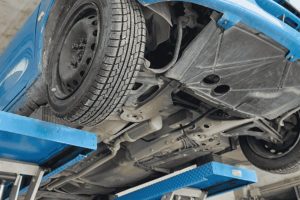
Look underneath the vehicle along the main structural rails. Any visible kinks, creases, or buckled metal in areas that should be straight and smooth indicate frame damage that needs immediate professional attention.
Misaligned Wheels or Uneven Tire Contact
Stand back and have a look at the vehicle from the front and rear. Wheels that appear to tilt or angle differently from one side to the other suggest structural misalignment impacting the suspension geometry. You will most likely feel this while driving (a noticeable pull from one side to the other). If allowed to go on, it will cause uneven wear and tear on the tires, possibly causing additional damage to your suspension system as well.
Crumpled or Buckled Areas Under the Vehicles
Any areas under the car that appear compressed, wrinkled, or pushed inward, particularly around the front subframe or rear floor structure, indicate that the impact forces reached the structural layer.
Driving Symptoms of Frame Damage
Sometimes, frame damage isn’t immediately obvious or visible, but the vehicle speaks its own language and may tell you what’s going on, or point you in the right direction. These driving symptoms are among the most reliable indicators that auto frame repair may be needed:
- Vehicle pulling to one side consistently, even on a flat, straight road.
- Unusual vibrations or shaking at highway speeds or during braking.
- Difficulty steering or a steering wheel that sits off-center when driving straight.
- Uneven or rapid tire wear, especially when wear patterns are dramatically different from one side to the other.
- Strange noises from the suspension, like creaks and pops, especially when traveling over speed bumps or shallow pot holes.
These symptoms don’t always mean frame damage. However, after a collision, they should be treated as frame repair signs until a professional inspection proves otherwise. Driving on a misaligned frame accelerates wear throughout your entire suspension system, tires, and steering components, turning a repairable problem into a far more expensive one.
Post Accident Warning Signs

Beyond what you can see and feel while driving, several post-accident indicators point to impact severity that warrants a professional frame inspection.
Airbag Deployment
Airbags are calibrated to deploy at specific impact thresholds. If your airbags went off, the collision generated enough force to potentially compromise structural components, even if the visible damage looks minor.
Fluid Leaks from Damaged Components
Coolant, oil, or transmission fluid pooling under the vehicle after a collision is an indication that impact forces reached components mounted to or near the frame.
Visible Damage to Suspension Components
Bent control arms, broken sway bar links, or a visibly collapsed wheel corner are signs that structural forces have reached the suspension mounting points.
Cracked or Broken Glass without Direct Impact
Frame flex during a collision can stress glass enough to cause cracking in windows that weren’t directly struck.
Dashboard Warning Lights
Post-accident warning lights, particularly those related to ABS, stability control, or steering, may indicate that sensors tied to the vehicle’s structural geometry are detecting abnormal readings.
How Frame Damage Affects Safety
A vehicle’s frame is the foundation of its entire passive safety system. Crumple zones are engineered to deform in specific, calculated ways during a crash, directing energy away from the passenger compartment and into controlled collapse zones.
When those areas have already been compromised by a previous collision and haven’t been properly restored to original specifications, the vehicle no longer performs the way it was designed to in a subsequent impact.
Structural damage usually impacts airbag system performance. Many airbag sensors are mounted to the frame or unibody structure. A misaligned frame can also alter the angles and thresholds at which those sensors trigger. This means the airbags may deploy late, not at all, or at the wrong threshold in a future accident.
How Frame Damage Affects Vehicle Performance
The safety implications are the most urgent concern, but an unrepaired car frame has significant performance consequences that stack over time:
- Poor handling and reduced control, especially at highway speeds or during emergency maneuvers.
- Accelerated wear on suspension components since some parts may be working at incorrect angles.
- Premature and uneven tire wear that leads to repeated replacement costs or blowouts at high speeds.
- Reduced fuel efficiency as increased rolling resistance and drivetrain strain push the engine harder.
- Ongoing alignment issues that can’t be permanently corrected without addressing the structural problem.
Frame technicians frequently see vehicles where multiple rounds of alignment work have failed to hold. This is typically because the root cause was never properly diagnosed or repaired.
Minor vs. Major Frame Damage
Obviously, not all frame damage is the same, and understanding the difference will help vehicle owners understand exactly what they’re dealing with.
Minor frame damage (small bends or misalignments in non-critical areas) can often be corrected using hydraulic straightening equipment and precision measuring to restore the vehicle’s frame to manufacturer specs.
If repairs are performed correctly, using proper frame machines, the vehicle will be restored to its pre-accident structural condition. Major frame damage involves severe bending, twisting throughout multiple structural zones, or damage to critical safety structures like A and B posts, rocker panels, or floor rails.
In these cases, the repair may be extensive, and if repair costs approach or exceed the vehicle’s value, insurance carriers may determine that the vehicle is a total loss.
The line between repairable and total loss isn’t always obvious from a visual inspection. It requires computerized frame measurement against OEM specifications to determine the true extent of the damage and whether or not restoration is structurally sound and appropriate.
Why Professional Frame Inspection Matters

One of the most important things to understand about car frame damage is that it frequently can’t be accurately assessed without professional equipment. A trained technician can see things in a 10-minute inspection that a vehicle owner might completely miss.
Modern frame shops use computerized measuring systems that map the vehicle’s dimensions against the manufacturer’s exact specifications. These systems identify deviations of just a few millimeters. These deviations will have significant consequences for handling, safety, and long-term component wear, but are invisible during a visual walkaround.
Professional inspection also matters for insurance documentation purposes. Accurate structural damage assessment creates a necessary paper trail for making sure that all repairs are fully covered and no hidden damage crops up after the claim is closed.
Long-Term Consequences of Unrepaired Frame Damage
Vehicle owners who delay or skip frame repair after a collision face consequences that go well beyond the immediate repair costs:
- Decreased resale value, since frame damage is disclosed on vehicle history reports.
- Ongoing mechanical problems.
- Safety risks for all occupants.
- Difficulty selling or trading in your vehicle.
Your best bet, if nothing else, is to get your car in front of a professional technician as soon as you’re able, make the necessary repairs, or at least eliminate the possibility that your vehicle is no longer structurally sound or safe.
The Frame Repair Process

When a vehicle rolls into a qualified frame shop, the repair process follows a fairly universal, structured sequence that’s designed to restore it to OEM specs:
- Computerized frame measurement to establish the exact dimensions and map deviations from manufacturer specs.
- Hydraulic straightening using frame machines to apply a controlled, measured force.
- Verification against original specs.
- Quality control and final inspection to confirm that alignment, suspension, and structural connections meet standards for safe operation.
The process requires both precision equipment and the skill/training to use it correctly. Not every shop has the tools or the expertise to perform structural repairs at this level.
When to Suspect Frame Damage
Some accidents make frame damage pretty obvious. Others, however, are hidden. As a general rule of thumb, frame inspection is warranted after:
- Any moderate to severe frontal collision.
- Side-impact accidents, even at relatively slow speeds.
- Rear-end collisions at speed, particularly those that pushed the vehicle forward significantly.
- Rollover accidents of any kind.
- Any accident in which the airbags were deployed.
Even accidents that seem relatively minor deserve a professional look. A collision that totals the front bumper cover and crushes the bumper beam may have transmitted enough energy to bend the front frame rails, damage that won’t show up until the bumper is removed and the frame is measured.
Why Mathews Auto Body
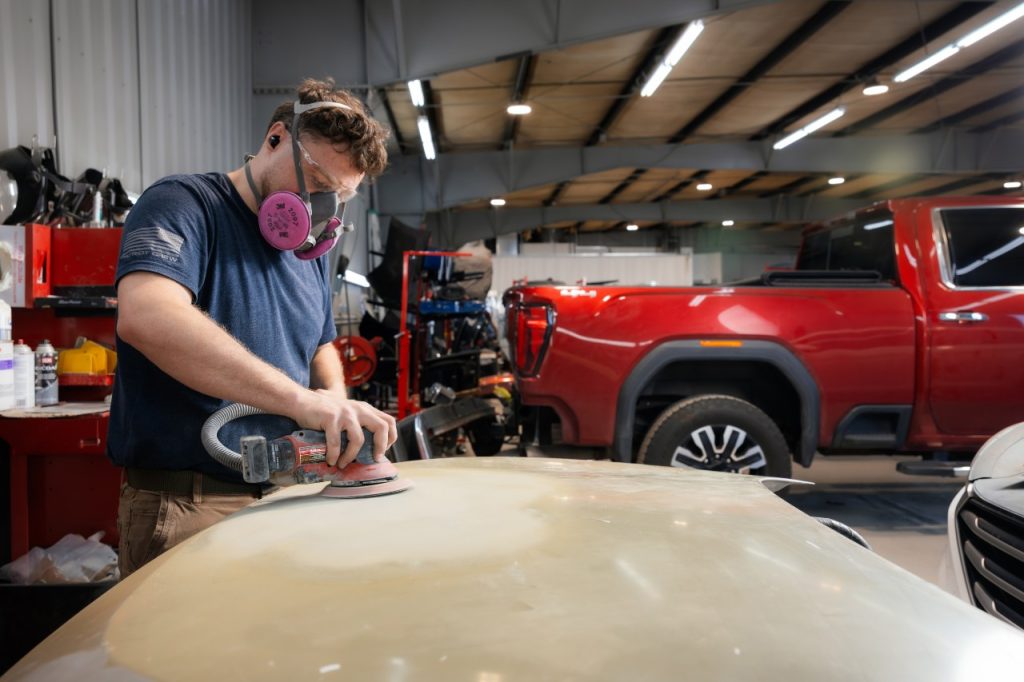
Mathews Auto Body has been serving the Tri-Cities area since 1981, and auto frame repair is one of the most technically demanding services we offer. Our certified frame technicians use advanced computerized measuring systems to accurately diagnose structural damage that’s invisible to the naked eye.
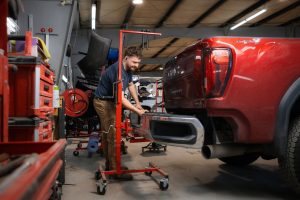
Our frame machines allow us to restore your vehicle’s frame to OEM specifications. We don’t proceed based on guesswork. We measure, document, repair, and verify because the safety of the people riding in that vehicle depends on us getting it right the first time.
Get a Professional Inspection at Mathews Auto Body
Concerned About Frame Damage? Get a Professional Inspection at Mathews Auto Body! Don’t risk your safety or vehicle value by ignoring potential car frame damage. Our certified technicians use advanced computerized measuring systems to accurately diagnose frame repair signs and structural issues invisible to the naked eye.
Whether you’ve been in a recent accident or suspect existing frame problems, we provide thorough inspections and honest assessments. Contact Mathews Auto Body today for a comprehensive frame inspection. Protect yourself, your passengers, and your investment! Call now to schedule your appointment and get the peace of mind that comes from knowing your vehicle’s true structural condition!