The crash itself lasted only two seconds. Now you’re standing in your driveway, looking at a vehicle that doesn’t quite match the one you owned yesterday, wondering what comes next.
According to the National Highway Traffic Safety Administration, more than six million traffic crashes happen in the United States every year. Most of those vehicles end up at an auto body repair shop, and the people who trust their vehicle to the right team get back on the road faster and safer.
This step-by-step guide walks through every important phase of the collision repair process so you know what to expect from drop-off to pickup. Here’s what you’ll learn:
- The nine stages of the collision repair process, from initial damage assessment to final quality check
- How insurance coordination, parts ordering, and repair services affect your timeline
- What separates a thorough repair from a rushed one
- How to choose a collision repair team that will restore your vehicle to factory standards
1. Initial Damage Assessment
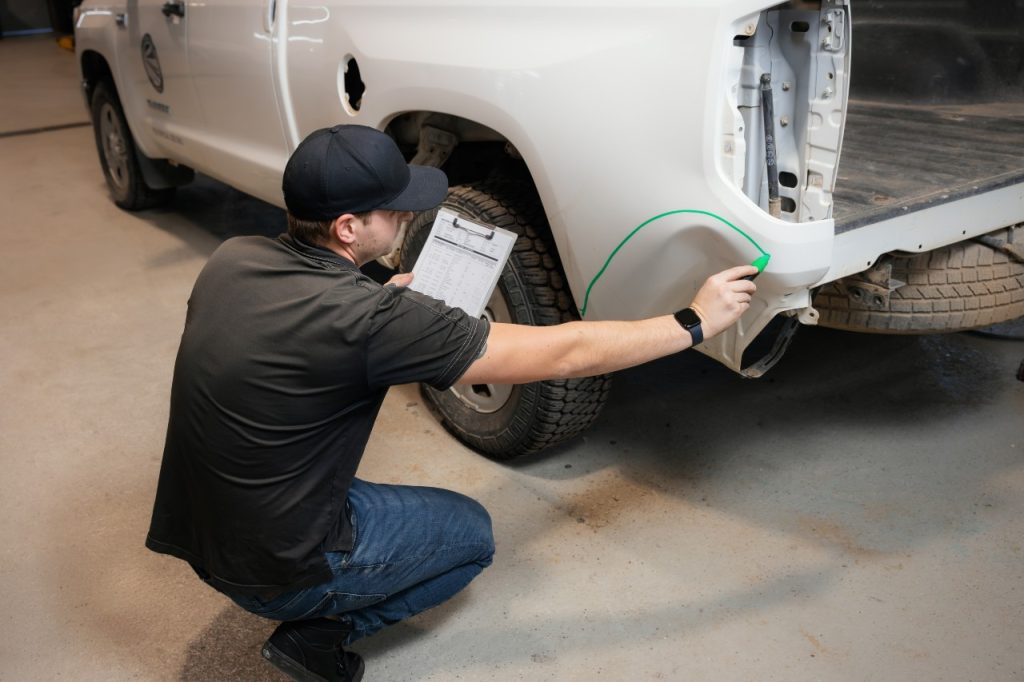
The first stop in the collision repair process is a thorough damage assessment by a trained technician. The team walks the vehicle from front to back, looking at panels, structural components, and safety systems before any repair begins.
A modern damage assessment goes far beyond what the eye sees. Diagnostic technology evaluates electronic systems, sensors, and ADAS components, while the team builds a detailed initial estimate that serves as the foundation for the entire repair.
Visual Inspection
The visible impact is only part of the story. The team documents every panel, dent, and scuff so nothing slips through the cracks once the repair begins, and a careful visual inspection prevents missed items from becoming expensive surprises later.
Hidden Structural Issues
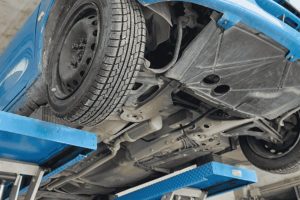
A small dent on the surface will hide a bent frame rail underneath. Trained technicians know exactly where to look, and early discovery prevents costly delays and protects the vehicle’s structural integrity throughout the rest of the repair.
Diagnostic Technology
Sensors, cameras, and onboard computers tell their own story about what the crash impacted. Diagnostic scans pull data from the vehicle’s systems and flag electronic and safety issues that visual inspection alone would miss.
2. Insurance Coordination
The collision repair phase goes much more smoothly when the auto body shop handles insurance coordination directly. A good team works with insurance adjusters from day one, submits supplemental requests when problems arise, and helps customers understand coverage and deductibles.
Direct repair program relationships speed things along even more. An auto body team with established insurance partnerships moves estimates and approvals faster, so your vehicle spends less time waiting and more time being repaired.
3. Disassembly and Complete Inspection
Once the initial estimate is approved, the team begins disassembling damaged panels and parts. Removing the outer layers exposes everything underneath, and that’s when hidden problems typically surface. This includes bent supports, compromised wiring, and structural concerns.
Every finding gets documented and added to the repair scope. The team updates the estimate, communicates the changes to the insurance, and obtains approval before any additional repairs begin.
4. Structural and Frame Repair
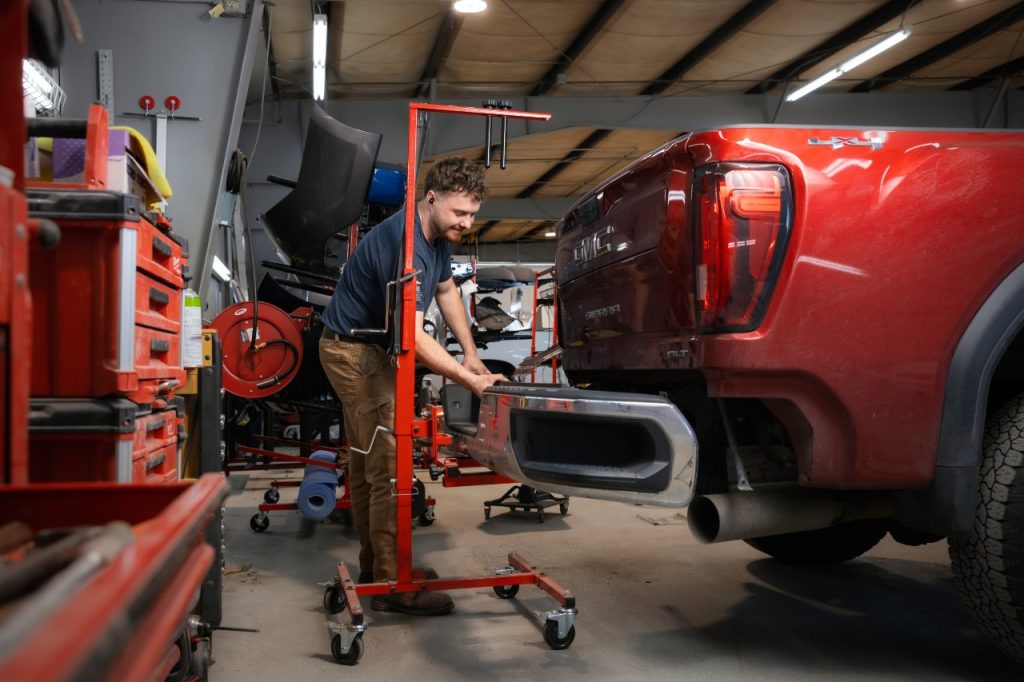
When the initial inspection reveals a bent frame or compromised structural components, repair shifts to one of the most important phases. This stage of the work has to be done right, because a vehicle’s structural integrity affects how it protects occupants in any future crash.
Computerized Measuring Systems
Modern frame repair starts with computerized measuring systems that map the vehicle in three dimensions. These systems compare current measurements against the manufacturer’s exact specifications and pinpoint every millimeter that needs correction.
Frame Straightening Equipment
Heavy-duty frame straightening equipment uses controlled hydraulic force to straighten bent components. The team works in small increments, constantly measuring so the frame returns to factory specifications.
Restoring Manufacturer Specifications
Every vehicle leaves the factory with precise structural tolerances, and a quality repair restores those exact dimensions. Cutting corners on this step compromises crash protection and will often void the manufacturer’s warranty.
5. Parts Ordering and Quality
Once the repair scope is locked in, the team orders the parts needed to put the vehicle back together. The choice of parts affects fit, finish, warranty, and how the car performs years down the road.
Comparison of Auto Parts Types
| Parts Type | Source | Fit and Quality | Warranty | Availability |
| OEM | Original manufacturer | Exact factory match | Full manufacturer warranty | Slower for older or specialty models |
| Aftermarket | Third-party manufacturers | Good to acceptable | Limited or none | Generally fast |
| Recycled / LKQ | Salvaged from other cars | Original quality, used condition | Often limited | Depends on inventory |
OEM parts are the gold standard for newer cars and safety components. Parts availability is the biggest factor in repair timelines, especially for newer vehicles waiting on backordered necessary parts from the manufacturer.
6. Body Work and Panel Replacement
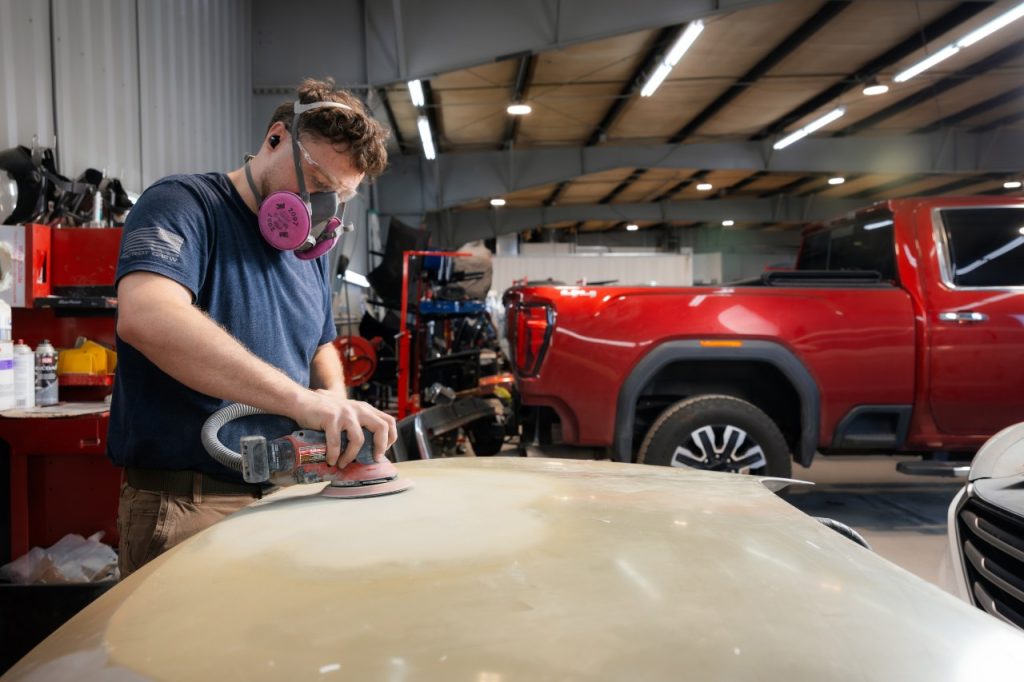
Once parts arrive, the team starts restoring the vehicle’s body to its pre-collision condition. Some panels may be repaired, others need full replacement, and the right call on each one comes down to severity, structural impact, and what delivers the best long-term result for the customer.
Repairing Damaged Panels
Minor dents and creases get worked out using specialized tools that pull, smooth, and reshape metal back to its original contour. The technique preserves the original panel and saves cost when the impact is moderate.
Panel Replacement
Severely damaged panels get cut out and replaced with new components. The team uses welding, bonding, and adhesive techniques engineered for each material, whether the vehicle is built from steel, aluminum, or modern composite blends.
Fit and Alignment
Every replacement panel needs to align perfectly with the surrounding body. Gap measurements, panel flushness, and hardware mounting all get checked and adjusted so the restored car looks and performs exactly the way it did before.
7. Paint and Refinishing
Painting and refinishing make the repair invisible. Done well, no one will be able to tell the vehicle was ever damaged. Done poorly, mismatched color and rough texture announce the repair to anyone who walks past.
Color Matching Technology
Modern color-matching technology uses spectrophotometers to read the exact factory color of the car, then mixes paint to that precise formula. The team accounts for fading, age, and any custom work, making sure the new paint blends seamlessly with existing panels.
Surface Preparation
Surface prep is the difference between paint that lasts decades and paint that peels in two years. The team sands, primes, and cleans every surface meticulously because paint adheres only as well as the surface beneath it.
Multi-Stage Painting and Curing
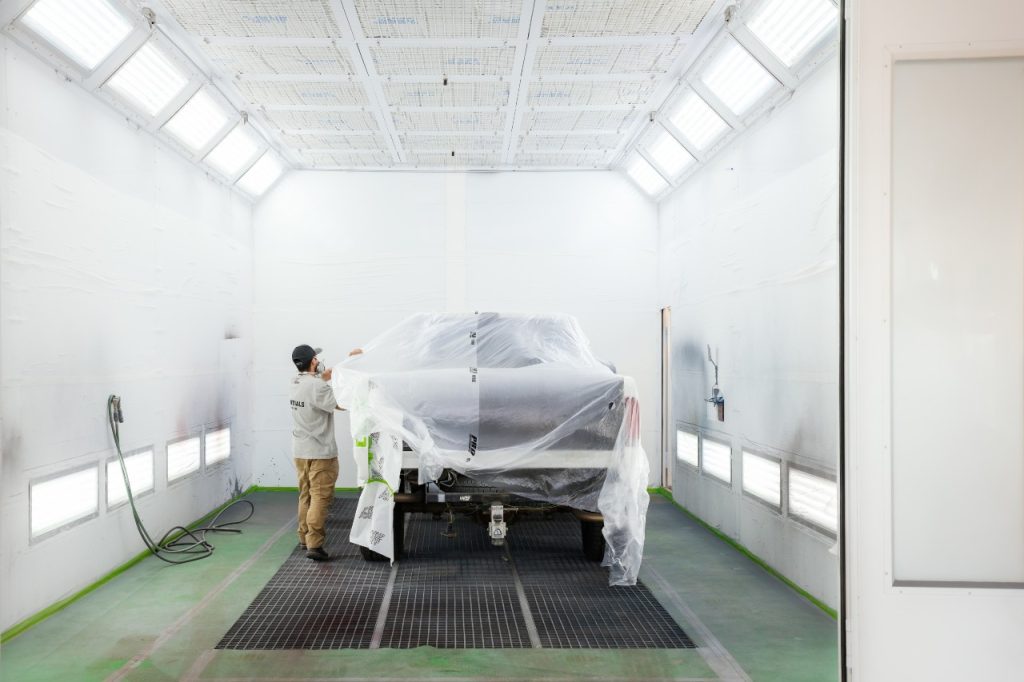
Paint goes on in carefully timed layers, including a base coat, a color coat, and a clear coat. Each layer needs proper curing time in a controlled paint booth, and rushing this stage of the repair is one of the fastest ways to compromise the final result.
8. Reassembly and Component Installation
With paint cured and panels ready, the team begins putting the vehicle back together. Trim, lights, sensors, electrical connections, and interior components are all installed in the right sequence, with every wiring harness reseated and every clip secured to factory specifications.
Modern vehicles need more than mechanical reassembly. Safety system calibration brings ADAS sensors, cameras, and collision avoidance technology back online, and detail work delivers a vehicle that looks and performs exactly the way it did before.
9. Quality Control Inspection
The final stop in the collision repair process is a multi-point quality control inspection that verifies every part of the repair meets factory standards. The team checks that the vehicle is mechanically sound, electronically calibrated, and ready to return to the customer.
A thorough quality control inspection covers:
- Paint evaluation for color match, gloss, and texture across every repaired panel
- System and feature testing for electronics, sensors, ADAS calibration, and safety components
- Mechanical work verification, including suspension, alignment, brakes, and drivability
- Final adjustments and detailing for fit, gaps, interior cleanup, and presentation
Only when every box is checked does the vehicle leave the team’s hands and head back to its owner.
Timeline Factors
Every collision repair runs on its own clock. A small fender bender might be back on the road in a few days, while a major structural repair sometimes stretches into weeks, depending on the situation.
A few key factors influence how long the work takes:
- Parts availability for newer or specialty vehicles stretches timelines when components are backordered
- Insurance approval delays when supplements are submitted for hidden problems discovered during disassembly
- Complexity of the impact, including structural work, ADAS recalibration, and multi-system electronic repairs
- Backlog at the auto body shop during peak crash seasons, such as winter weather or major holidays
A good team communicates timeline updates throughout the repair so customers always know what to expect.
Why Choosing the Right Collision Repair Team Matters
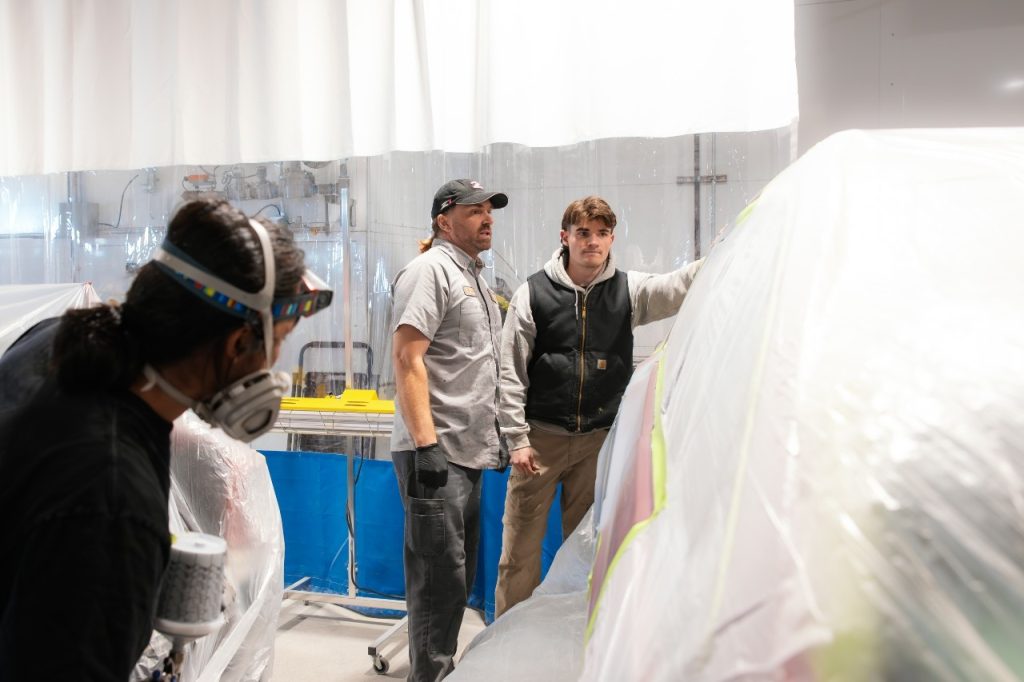
Modern vehicles are more complex than ever, and the right collision repair team is committed to delivering services that restore both safety and value. Cutting corners is never an option for a professional auto body team committed to excellence.
According to Autobody News, 35.6% of repair estimates now include at least one ADAS calibration, and diagnostic scans appear on 87.7% of estimates. Specialized expertise isn’t optional anymore.
When evaluating a collision repair team, focus on these qualifications that matter most to people who care about their vehicles:
- Certified technicians committed to ongoing training in modern auto body repair services
- Advanced repair services that deliver accurate measurements and ADAS calibration
- A quality workmanship promise that backs every repair the team performs
- Insurance expertise that helps customers move easily through claims
- Transparent communication with every family that trusts the team with their vehicles
A professional team committed to its community treats every customer like family. The right team protects both the vehicle and the people who ride in it, and that promise of excellence is what keeps customers coming back and referring friends.
Get Your Vehicle Back to Pre-Collision Condition
A collision throws your daily life off balance. You need a repair team that handles the work right the first time, communicates clearly through every stage, and gets you back on the road without cutting corners on the things that protect you and your family.
At Mathews Auto Body, our certified technicians handle everything from initial damage assessment to the final inspection. We work directly with your insurance, use OEM parts, and restore your vehicle to factory specifications so it looks, drives, and protects exactly the way it did before the crash.
Contact our team today to schedule a free damage assessment. We will walk you through the repair scope, explain your options, and give you a realistic timeline before any work begins.
Your Collision Repair Questions Answered
How do I get an online estimate?
Most auto body teams let you start with photos through a website form or contact page. An online estimate gives you a rough number, but a true estimate is easy to get in person at the team’s location.
How quickly can I get an appointment?
Most teams will schedule an appointment within a week, sometimes the same day for urgent cases. Call ahead to confirm location hours and book a time that works.
Do auto body teams handle windshield repair, too?
Many collision repair teams handle windshield damage as part of a larger repair, since a cracked windshield often comes with crash-related panel damage. Ask whether the team performs windshield work in-house or partners with a glass specialist.
What is the team’s mission, and how do they serve the community?
Look for a team whose mission is to serve customers and the community with excellence and integrity. The best teams join local events, post updates regularly, and treat every opportunity to help a family as a chance to build trust.
What should I do right after a crash?
Check yourself and your passengers for injuries first. Then document the scene, contact your insurance, and find a collision repair team you trust to walk you through what comes next.